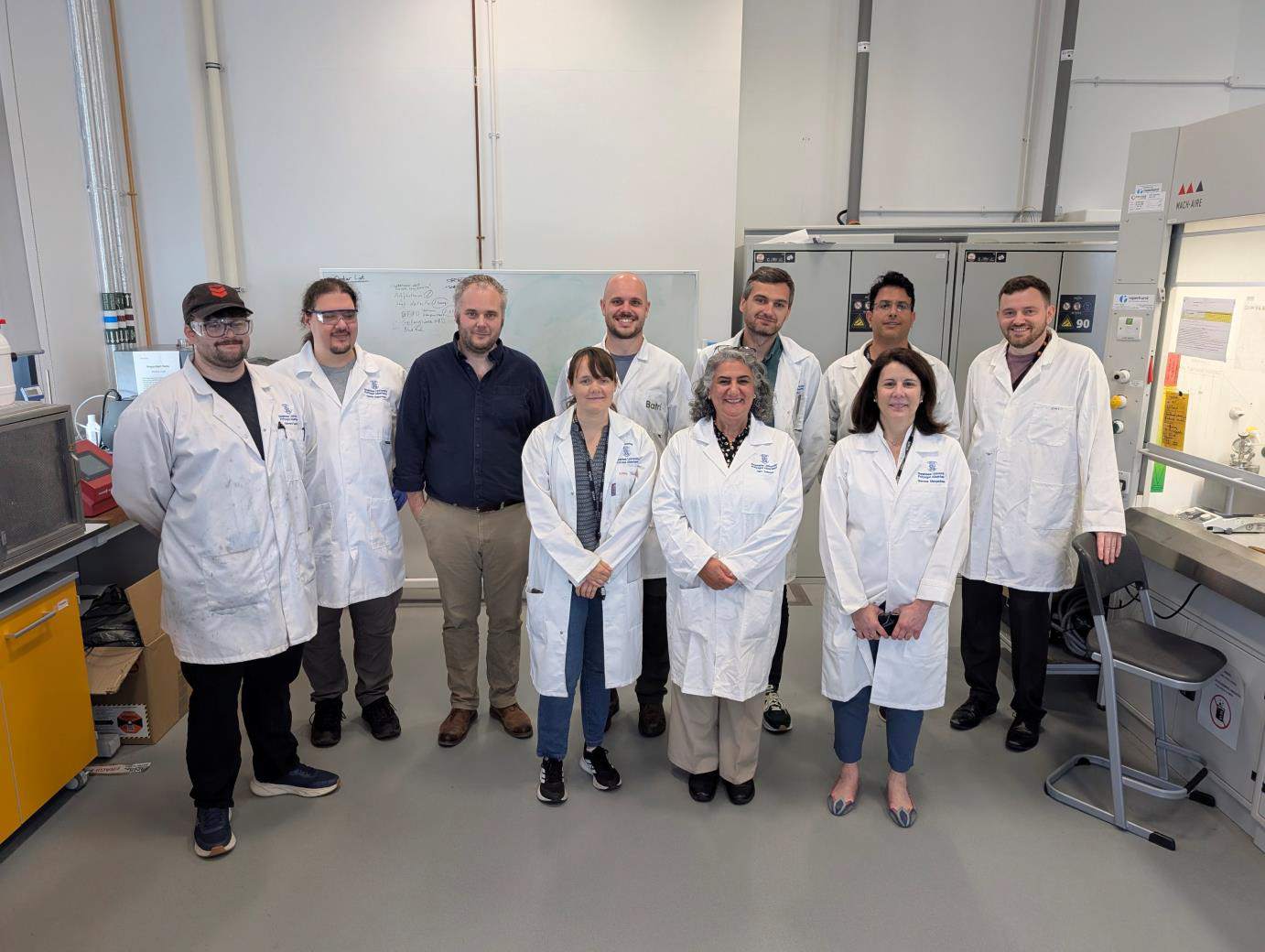
Batri and Swansea University Announce Landmark UK Milestone in Sodium-Ion Cell Development
A landmark moment for the UK battery industry has arrived; a new cylindrical sodium-ion cell built with Welsh materials and homegrown innovation. Believed to be the first of its kind made in the UK using fully UK-manufactured anode and cathode materials, the demonstration 18650 cell highlights the rapid acceleration of the nation’s sodium-ion capabilities.
Backed by Faraday Institution funding, Batri and Swansea University have manufactured an 18650-format sodium-ion cell that signals the emergence of a genuinely sovereign battery supply chain.
The cell combines sodium-ion chemistries developed by Batri and Swansea University, including Welsh coal-derived composite carbon, with the active materials representing home-grown IP and nationally available supply chains.
A Major Step Toward a Fully Localised Sodium-Ion Supply Chain
This milestone was enabled through targeted support from the Faraday Institution, whose Sprint funding accelerated development, testing, and integration of UK-grown materials into a commercial cylindrical cell format.
The project brings together the best of British materials science and industrial capability, focusing on:
- Scaling locally made anode and cathode materials
- Validating manufacturability in industry-standard formats
- Reducing reliance on imported components
- Strengthening the foundation for a sovereign sodium-ion ecosystem
“This achievement shows what is possible when UK science, UK manufacturing, and bold ambition come together,” said Dr Stephen Hughes, CTO of Batri.
“We’re unlocking a sodium-ion ecosystem that starts in Wales and is aiming to reach global markets. The need for safe, robust, and cost-effective alternatives to lead-acid and lower performance lithium-ion is enormous, particularly in applications where resilience, sustainability, and supply-chain security are critical. This milestone shows that Batri, and the wider UK ecosystem, are ready to answer that demand.”
From Breakthrough to Scale: The Next Phase Begins
This demonstration cell marks the beginning of a wider development programme. More cells are already in production, with Batri now scaling up both material manufacture and in-house cell-building capability in Wales.
Batri is also working closely with strategic partners such as AceOn Group to integrate UK-made sodium-ion cells into swappable packs, including as part of the StamiNa Ayrton Challenge on Energy Storage project; and custom energy systems. These solutions are being designed for high-demand environments where long cycle life, strong safety characteristics, cost-effectiveness, and supply-chain independence are essential.
Mark Thompson, CEO of AceOn group explained the commercial and strategic importance of this milestone:
“Sodium-ion is rapidly becoming a crucial technology for the applications we serve – from mobility and industrial power to stationary storage in harsh environments. Batri’s UK-made 18650 breakthrough, backed by Swansea’s world-class materials science, shows the UK can lead in safe, robust alternatives to lead-acid and entry-grade lithium. We’re proud to partner on the next phase, integrating these cells into modular, swappable solutions ready for scale.”
Swansea: The UK’s Emerging Sodium-Ion Powerhouse
This milestone also underscores the growing strength of the Swansea sodium-ion innovation cluster, now a dynamic hub for next-generation battery research, materials development, and cell engineering.
Professor Serena Margadonna commented:
“Swansea is quickly becoming a focal point for sodium-ion innovation, and this achievement shows what can be delivered when academia and industry collaborate with urgency and purpose. This is a powerful example of Welsh research translating into real technological capability for the UK.”
The region is positioning itself to deliver high-value R&D roles, industrial-scale materials production, new cell manufacturing capabilities, and a growing pipeline of investable opportunities.
Cllr Rob Stewart, Swansea Council Leader, said:
“This milestone strengthens Swansea’s position as one of the UK’s most exciting locations for advanced energy innovation. The growing sodium-ion hub here is already attracting significant inward investment, supporting new skilled jobs and creating real momentum for the regional economy. We are proud to see Swansea emerging as a centre of excellence in a technology with such huge global potential. This also aligns with the wider ambitions of the Swansea Bay City Region as a whole.”
A Major Signal to Investors and Industry
Sodium-ion technology is rapidly emerging as a safe, sustainable, and geopolitically secure alternative to lithium-ion, one that can be produced using abundant materials and shorter, more resilient supply chains.
This milestone sends a strong signal to investors: UK sodium-ion is real, it is scalable, and it is moving fast.
“Producing a cylindrical sodium-ion cell using UK-made anode and cathode materials is not just a scientific milestone, it is a strategic one. It proves that sovereign battery production is viable and already happening here in Wales,” added Dr Hughes.
About Batri Ltd
Batri is a UK-based energy materials and technology company developing advanced anodes, cathodes, and next-generation sodium-ion cells using UK and European supply chains. Batri’s mission is to build secure, sustainable battery production capacity that strengthens national energy resilience and accelerates global decarbonisation.
This press release was originally published on Batri, and has been republished here with permission.
Media Contact
Mrs. Joanna Pontin
Exec VP Marketing and Communications
Batri Ltd
Email: contact@batri.com
Phone: +44 (0) 330 053 9699
Web: www.batri.com