Launchpad Leaders: The Roof Accelerating Net Zero Housing in Wales
Engineered for longevity and sustainability, Power-Roof® is Advanced Construction Technologies Limited (ACTL)’s answer to rethinking how social housing can transition to net zero.
Following its success in securing funding through the South West Wales Net Zero Industry Launchpad, ACTL is accelerating the development of Power-Roof® — a fully integrated roof cassette designed to transform the way homes generate and retain energy.
By combining streamlined installation with built-in heat recovery, solar PV generation and other energy-efficient technologies, the system is designed to reduce energy waste, lower household bills and improve living conditions for residents.
To find out more, JOMEC students spoke with ACTL’s Managing Director, Stephen Pattenden.
How does ACTL’s Power-Roof® system work to improve energy efficiency in social housing?
Power-Roof® integrates multiple energy-saving technologies into a single roof cassette system designed specifically for retrofit applications.
Photovoltaic (PV) panels, covering up to 85% of the roof surface, generate electricity to support household demand via an inverter.
Beneath the weatherproof layer and PV panels sits an innovative heat recovery layer that captures solar thermal gain to support systems such as heat pumps, hot water cylinders or Mechanical Ventilation with Heat Recovery (MVHR), improving overall system efficiency.
The cassette also incorporates 300mm of mineral fibre insulation, giving the roof a U-Value of 0.1, significantly reducing heat loss through the roof — one of the largest sources of energy waste in older homes.
By combining renewable electricity generation, solar heat recovery and high-performance insulation into one integrated solution, Power-Roof® enhances both the thermal and operational efficiency of a property. This gives Power-Roof® a rapid pay back of around 2 years for new build and between 5 and 10 years for retrofit.
How did the idea for Power-Roof® originate?
The idea emerged around ten years ago from a simple question: how can we bring together all the elements required for net zero housing into one practical, cost-effective solution?
In much of the UK’s older housing stock — particularly within social housing — roofs are approaching the end of their lifespan. Rather than replacing like-for-like, ACTL saw an opportunity to rethink the roof as a central energy asset.
By turning a necessary replacement cycle into a transformational retrofit intervention, Power-Roof® was designed to upgrade a home’s energy performance in a single step — reducing waste, lowering bills and supporting long-term decarbonisation.
How did the Innovate UK Launchpad funding support the development of Power-Roof®?
The funding enabled us to move from concept refinement to practical delivery — supporting key elements such as transport, accommodation, materials and manufacturing. This has allowed the team to test and validate the design in real-world conditions, ensuring the project could be executed to a high standard, whilst delivering meaningful learning outcomes.
Crucially, the funding has helped us identify improvements for the future, including refining surveying processes and ensuring that complete roof packages are delivered accurately and efficiently to site.
How does Power-Roof support Wales’s net zero housing ambitions?
Decarbonising housing is central to Wales’ wider climate strategy. A significant proportion of domestic energy loss occurs through poorly insulated roofs, representing both financial and environmental waste.
Power-Roof® addresses this challenge by combining insulation, electricity generation and solar heat recovery within one rapid integrated retrofit solution to support the transition to more energy efficient homes.
If deployed at scale, integrated retrofit solutions like this could make a meaningful contribution to reducing overall energy consumption and accelerating progress towards net zero targets.
What difference could this make for residents and communities?
Older homes are often poorly insulated and expensive to heat, making them vulnerable to issues such as condensation and mould. By installing Power-Roof®, residents can benefit from warmer, drier and healthier living environments, while lowering household energy bills.
With hundreds of thousands of social housing properties across the UK in need of roof replacement or energy upgrades, the potential scale of impact is significant. Reducing wasted energy not only cuts emissions but also allows households to retain more of their income — delivering social, environmental and economic value.
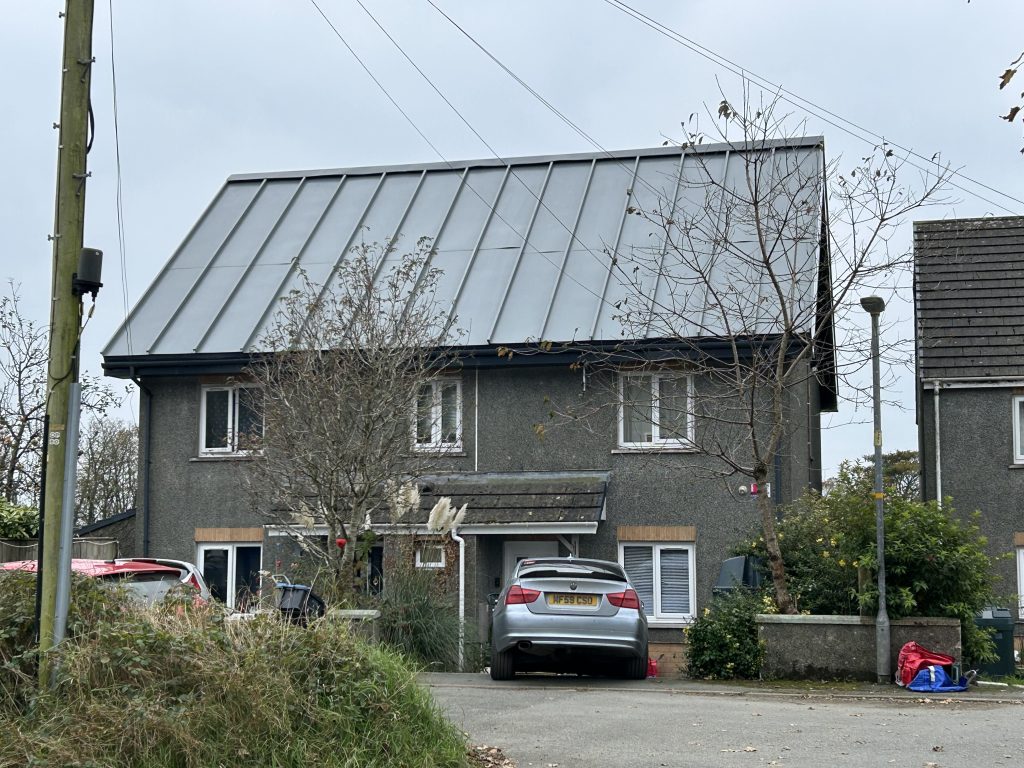
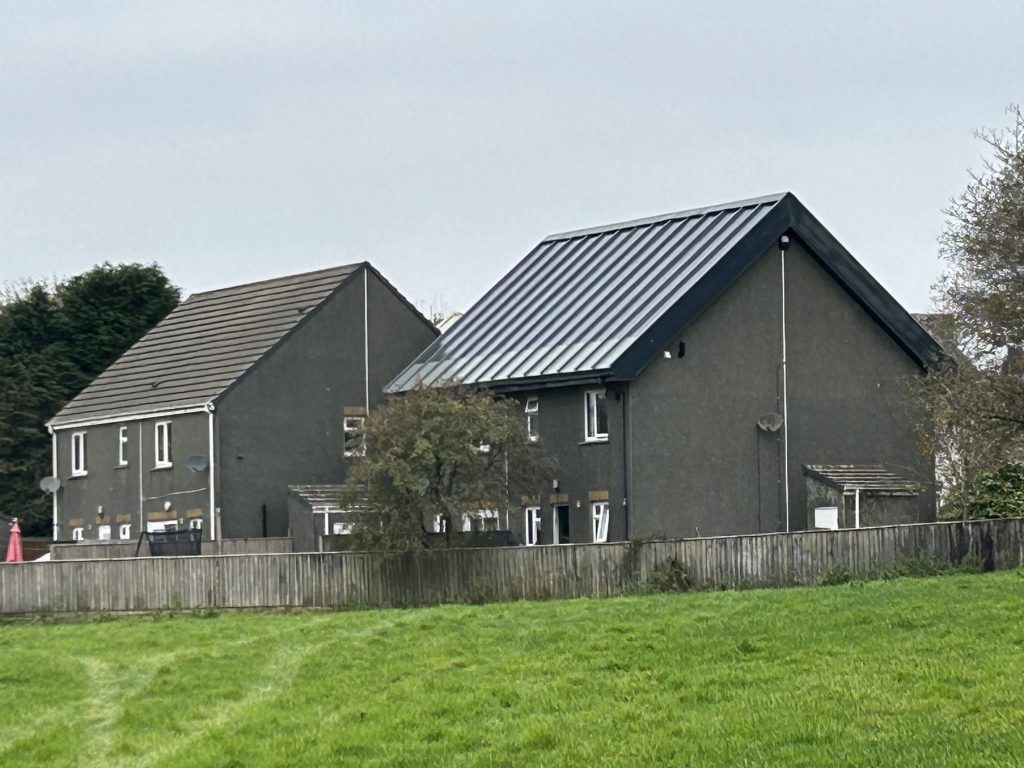
As part of our recent Launchpad project, we installed Power-Roof® onto a couple of semi-detached houses near Haverfordwest which are now making the tenants more comfortable, and their electricity and oil bills will be lower. Since the work was done in a few days, the tenants didn’t need to move out while the work was done.
What’s next ACTL and Power-Roof®?
The next stage focuses on scaling delivery and increasing efficiency.
We’re exploring ways to automate the surveying of social housing stock — identifying properties in need of intervention, capturing roof measurements digitally and feeding that data into a Building Information Modelling system.
This would allow roof cassettes to be manufactured precisely and delivered ready for installation, streamlining the entire retrofit process.
We are also looking at improving the manufacturing method itself, including the potential use of aluminium extrusion to increase efficiency.
The opportunity and potential impact are significant. What excites us most is that this is not just an environmental solution, but one that delivers tangible benefits for people, communities and the wider economy — not least rendering every house with a Power-Roof®.