Launchpad Leaders: Building the Future of Offshore Wind – Wales’ vision for Deep-water Wind
As demand for renewable energy accelerates, offshore deep-water wind is emerging as the next frontier. While onshore wind and fixed-bottom offshore turbines are now well established, around 80% of the world’s wind resource lies in deeper waters, beyond the reach of traditional foundations.
Swansea-based marine energy company Marine Power Systems (MPS) aims to unlock this opportunity through its innovative PelaFlex deep-water wind platform solutions.
JOMEC students spoke to Gareth Stockman, CEO at MPS about the inspiration behind PelaFlex, the impact of South West Wales Net Zero Industry Launchpad funding, and what Wales’ net zero transition could mean for industry and innovation.
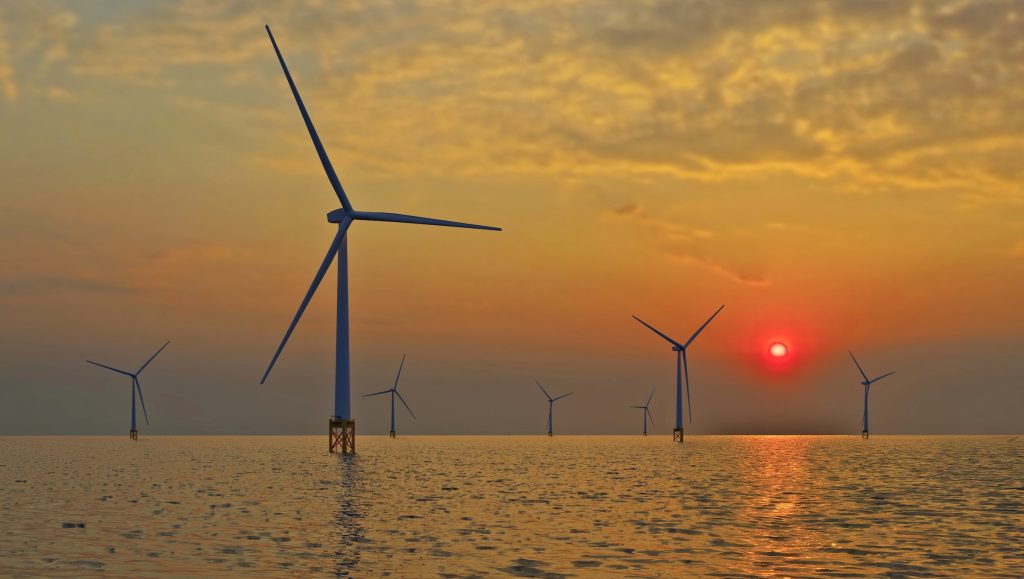
Image credit: Marine Power Systems
What was the inspiration behind PelaFlex, and what was it designed to solve?
Fixed-bottom offshore wind is proven and cost-effective. However, as projects move into deeper waters, they become more expensive and complex to deploy, pushing up the levelised cost of energy (LCOE).
With PelaFlex, our goal is to reduce cost and complexity while lowering risk, so that deep-water wind projects can become profitable and delivered at scale.
What makes PelaFlex different from other deep-water offshore wind platforms?
We have built a technology portfolio to support the transition into deeper waters.
Between 60 and 130 metres, we deploy our hybrid configuration (PelaFlex GS) which is designed to bridge fixed and floating foundations. It offers the stability developers want, with the flexibility deeper sites demand. A lower-risk step into deeper water.
Beyond 130 metres, we switch to our full floating solution (PelaFlex TS). Engineered for very deep water, it unlocks access to the strongest offshore wind resources, where fixed simply can’t operate.
Both configurations are built around what developers need most – economically viable projects, reduced risk, and reliable access to the best wind resources available.
Why was it important to base PelaFlex within the Welsh industrial supply chain?
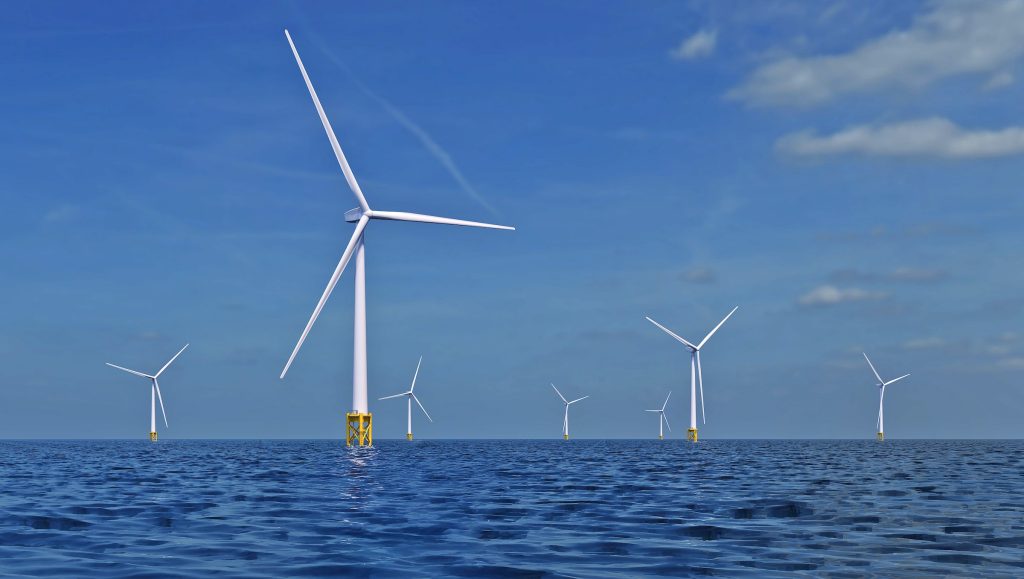
Image credit: Marine Power Systems
The Celtic Sea represents one of the UK’s most significant opportunities for deep-water offshore wind. Delivering it at scale will require hundreds of platforms and with that, substantial volumes of steel, fabrication capacity and skilled engineering.
In theory, those structures could be built overseas and shipped back to Wales. That would be costly, complex and commercially inefficient. At the same time, Governments and developers are under increasing pressure to maximise local content, particularly where public funding supports deployment. Projects must deliver more than clean energy. They must deliver economic value too.
A home-grown, highly automated manufacturing facility serving Celtic Sea projects would anchor long-term, highly skilled jobs in the region and support sustainable, evergreen employment across engineering, fabrication and operations. It would strengthen the regional supply chain, reduce transport emissions, and directly support the UK’s Net Zero and energy security ambitions.
How has South West Wales Net Zero Industry Launchpad funding supported the development and manufacturability of PelaFlex?
The £568,000 of funding enabled us to work closely with partners including Tata Steel, Swansea University, SWW Ports (specifically the Port of Milford Haven and ABP Port Talbot), and Pembrokeshire-based steel fabricator, Ledwood.
This support allowed us to review and optimise the PelaFlex design with a real focus on manufacturability and maximising opportunities for the local supply chain.
As a result, we developed optimised PelaFlex platform solutions, that can use steel from Tata Steel’s electric arc furnace, with fabrication, assembly and port operations carried out by Welsh companies before installation offshore.
Marine Power Systems (MPS) has secured grant funding from the Offshore Wind Growth Partnership (OWGP) to accelerate plans for a dedicated PelaFlex fabrication facility. The purpose-built hub will bring the entire build process under one roof, from individual steel components through to final assembly, using a highly automated, space-efficient layout designed for scale.
Once operational, the facility will be capable of producing up to 50 PelaFlex platforms per year, each ready for rapid load-out using standard vessels.
Can you tell us more about the collaboration with Swansea University, Tata Steel and the Port Talbot region, and how these partnerships have strengthened the project?
Our partnership with Tata Steel has been fundamental to the project. It has been a close and collaborative relationship, with shared objectives and a strong commitment to finding practical solutions.
The aim was to explore how low-carbon steel produced in Port Talbot could be integrated into the platform design. Working alongside Swansea University, we focused on optimising the structure so that we could use this steel efficiently while significantly reducing the overall mass of the platform.
Through this process, we were able to design a product that uses 50% of the steel of a semi-submersible design and delivers a reduction of 30% in LCOE when compared to the same semi-sub design – delivering benefits in terms of cost, performance and environmental impact.